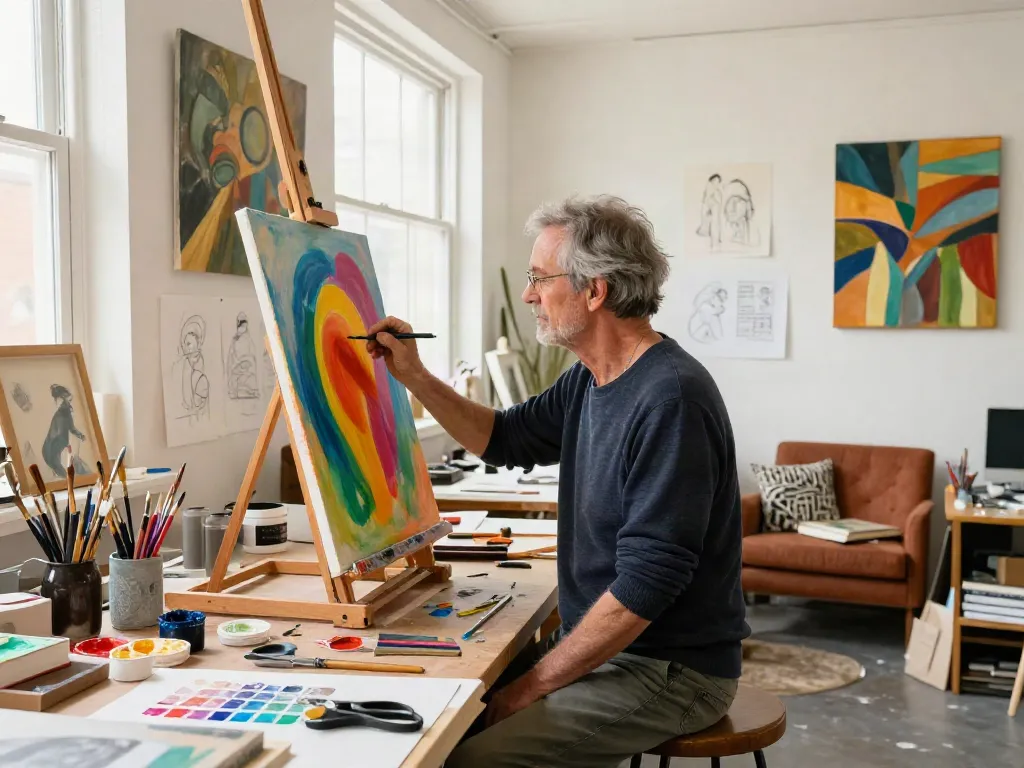
Introduction to Bruce L. Bailey: Artist and Innovator
Bruce L. Bailey is a multifaceted artist who has journeyed through various professional landscapes before returning to his first love: art. With a background in engineering, Bailey brings a unique perspective to the creative world, intertwining his technical skills with an emotional engagement that gives life to his art. This article explores his artistic journey, the influences that shaped his work, and his ongoing evolution as an artist. For those interested in learning more about Bruce Bailey, a visit to the Bruce Bailey Toronto page presents comprehensive insights into his life and work.
Overview of Bruce Bailey's Artistic Journey
Starting in the late 1960s, Bruce's artistic endeavors began almost serendipitously. His early works, characterized by vibrant felt marker drawings, evolved into intricate silk screen prints using hand-cut rubylith stencils. Influenced by heavyweights such as Albrecht Dürer and Giambattista Piranesi, Bailey's early pieces reflected a confluence of emotional exuberance and intellectual depth. His time at Boston University School of Fine Arts laid the groundwork for a lifelong engagement with visual media, despite subsequent professional commitments that diverted his focus from art.
The Evolution of Artistic Techniques
Throughout his career, Bailey has continually adapted and evolved his artistic techniques. From the use of traditional mediums like drawing and printmaking in his earlier works to a more modern incorporation of technology, he exemplifies the dynamic nature of art. The resurgence of interest in his early methodologies over the past few years illustrates not only his growth as an artist but also the adaptability required in today's ever-changing artistic landscape.
Early Artistic Years and Influences
The Impact of Literature and Philosophy on Art
Bailey's artistic expression has been deeply intertwined with his passion for literature and philosophy. Influenced by authors such as George Orwell, Albert Camus, and T.S. Eliot, his works often mirror the complexities of human emotion and societal structure. The philosophical underpinnings derived from these readings have provided Bailey with a rich thematic reservoir, informing both the content and the emotional resonance of his art.
Key Artistic Inspirations: Durer, Piranesi, and More
Among Bailey's primary influences, artists like Dürer and Piranesi stand out, shaping his aesthetic sensibilities. Dürer's precise detail and Piranesi's imaginative architectural forms have not only inspired Bailey's technical approach but also his conceptualization of space within art. This synthesis of styles underlines the importance of historical dialogues within contemporary artistic practice, revealing how past influences can rejuvenate modern works.
Formative Experiences at Boston University
Bailey's formal training at the Boston University School of Fine Arts was pivotal in shaping his artistic foundation. Pursuing a major in painting during his two years there, he developed essential skills and a critical eye for visual composition. This educational experience allowed him to experiment with different mediums and techniques, laying the groundwork for his later artistic explorations.
Career Transition: From Engineering to Art
Balancing Family Life and Professional Aspirations
The period spanning 1978 to 2015 was marked more by family responsibilities and engineering careers than by artistic pursuits for Bailey. This phase of life was dedicated to nurturing a family and excelling in aerospace engineering, culminating in a degree from Drexel University. Despite the shift away from active creation, Bailey's breadth of experiences during this time enriched his understanding of structure and design, which would later influence his art.
Lessons Learned from Aerospace Engineering
Bailey's background in aerospace engineering has endowed him with a unique problem-solving mindset that informs his artistic processes. The precision and attention to detail required in engineering translate into his artwork, allowing him to blend technical acumen with creative expression seamlessly. This integration of engineering principles into art exemplifies how diverse experiences can merge to foster innovative artistic practices.
The Role of Education in Artistic Development
Education has played a critical role in Bailey's artistic renaissance. After a long hiatus from creating art, he returned to academia at the University of Massachusetts Dartmouth, pursuing a Post-Baccalaureate in Painting. This decision to partake in ongoing education exemplifies the importance of lifelong learning, as he has filled gaps in his skills and knowledge, reconnecting with the artistic techniques and inspirations from his earlier years.
Artistic Rebirth: The Return to Creative Expression
Continuing Education at the University of Massachusetts Dartmouth
Bailey's studies at the University of Massachusetts Dartmouth have been a transformative period in his artistic journey. Engaging with accomplished educators has allowed him to refine his techniques and explore new avenues of expression. The environment has fostered a renewed creativity, enabling Bailey to adopt contemporary tools while remaining rooted in traditional methodologies.
Reconnecting with 1970s Artistic Roots
In recent years, Bailey has experienced an artistic rebirth, revitalizing the styles and techniques from his formative years. This reconnection has not only surprised him but has allowed for an intense creative engagement, propelled by a newfound access to technology and tools that enhance his artistic capabilities. Through revisiting his past, he has discovered fresh interpretations and applications of his earlier work.
The Significance of Emotional and Philosophical Themes in Art
Bailey's art transcends mere aesthetics, delving into the emotional and philosophical realms of human existence. He emphasizes that while technology and methods may evolve, the core of artistic expression lies in discovering a deeper understanding of emotions and beliefs. This introspective approach creates a profound connection between the viewer and the artwork, prompting reflection on the human condition.
Looking Ahead: Future Trends in Art and Technology
The Influence of Digital Tools on Traditional Art Forms
The contemporary art landscape is increasingly shaped by digital technologies, allowing artists to explore new dimensions of creativity. This shift has led to the emergence of hybrid art forms that merge traditional craftsmanship with digital innovations. Artists like Bailey are at the forefront of this evolution, utilizing technology to expand their artistic vocabulary while remaining loyal to their foundational techniques.
Emerging Trends for Artists in 2026
As we approach 2026, several trends are expected to define the art world. The rise of artificial intelligence in art creation, the growing significance of virtual galleries, and the increasing intersectionality of diverse artistic practices will be notable. Artists will need to adapt to these changes, embracing both technological advancements and their unique voices to remain relevant in a rapidly evolving landscape.
How Artists Can Navigate the Changing Landscape
For contemporary artists looking to navigate this changing landscape, continuous learning and adaptability are vital. Engaging with new technologies, experimenting with different mediums, and finding ways to connect emotionally with audiences will become increasingly important. Moreover, artists should emphasize their unique narratives and perspectives, allowing their individual stories to resonate within the broader context of societal discourse.
What are the main themes in Bruce Bailey's artwork?
Bruce Bailey's artwork predominantly explores themes of human emotion, existentialism, and philosophical inquiry. His pieces often reflect a deep engagement with literary and historical influences, creating a dialogue between the viewer and the intricate narratives within his work.
How has Bruce Bailey blended technology with art?
Bailey has adeptly blended technology with traditional art forms, utilizing modern tools to enhance his creative expression without compromising his emotional depth. This approach allows him to explore new dimensions while maintaining the authenticity of his artistic voice.
What can aspiring artists learn from Bruce's career path?
Aspiring artists can learn the value of resilience and adaptability from Bruce's career path. His diverse experiences remind us that artistic journeys are nonlinear, and embracing different life phases can enrich one's creative prowess.
What role does philosophy play in Bruce's artistic process?
Philosophy plays a crucial role in Bruce's artistic process, informing his thematic choices and emotional depth. It allows him to explore complex human experiences and translate them into visual languages that resonate with audiences.
What future trends are expected in the art world?
The future of the art world is likely to be influenced by technological innovations, shifts in cultural narratives, and the growing importance of interdisciplinary collaboration. Artists will need to navigate these trends while staying true to their creative identities.